

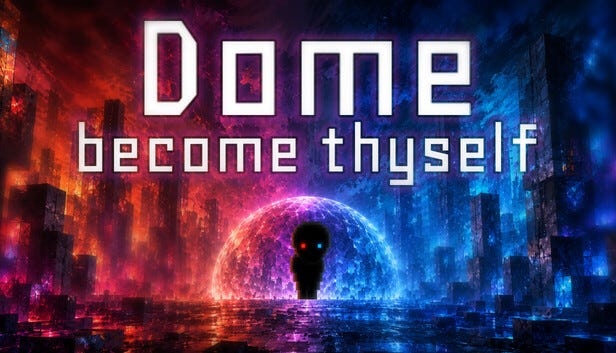
The Akashic Records are represented in spiritual literature as a compendium of all universal events, thoughts, words, emotions, and intent that have occurred in the past, present, or future. They include not just humans and our lives, but all entities and life forms to have ever existed. Theosophists and other derived religious movements believe the records are encoded in a non-physical plane of existence: the mental plane.
Dome: Become Thyself is the first game set in the Akashic Records in game form. The concept appears in games such as .hack and is referenced as the Record of Fate in Chrono Cross, but no other game has made the Akashic Records a core part of its worldbuilding and gameplay. You arrive at this maze world to learn how to defend yourself, then you explore the Akashic Records and make your own story.
I reached out to the developer, Nenad Jurić, and we talked about the game’s launch in Early Access, about the worldbuilding, and what to expect going forward in updates and new content patches. While the gameplay foundation might be ready for players to explore, the game’s story is expected to develop further in later patches.
Open Systems and Open Ends
You wake up from a kind of portal and talk to a fellow next to it; he gives you a brief tutorial, and you set off. You get one weapon by choosing a basic emotion, such as joy, sadness, anger, and so on. Initially, the game felt like a minimalistic 3D open-world version of Binding of Isaac, but Nenad shared that he had other influences.
Not The Binding of Isaac specifically, but yes, similar games were a huge inspiration. For example, replay value found in Noita coupled with deep systems and exploration, or player curiosity and long-term progression analysis found in No Man’s Sky.
We all remember the release of No Man’s Sky, but Dome avoids the whole business of overpromising and underdelivering. There are a lot of great ideas here, but this is a one-man studio, and players should be careful about expectations, even if the game is inexpensive. Nenad discusses the future development in clear and honest terms.
The honest answer is that the mechanics and systems are much further ahead in development than the story. The reason being that I wanted to build the actually fun and interesting parts of the game first, and then layer the content on top of them. This is reflected in the currently released Early Access version. Players can travel in any direction, including up and down. Everything scales with distance from origin, which makes careful planning and crafting essential, with a side effect of speedrunning being extremely fun. Soon, the difficult testing phase is over, and the story can finally take its place. This includes side quests that also serve as tutorials for crafting, word casting and other Dome skills.
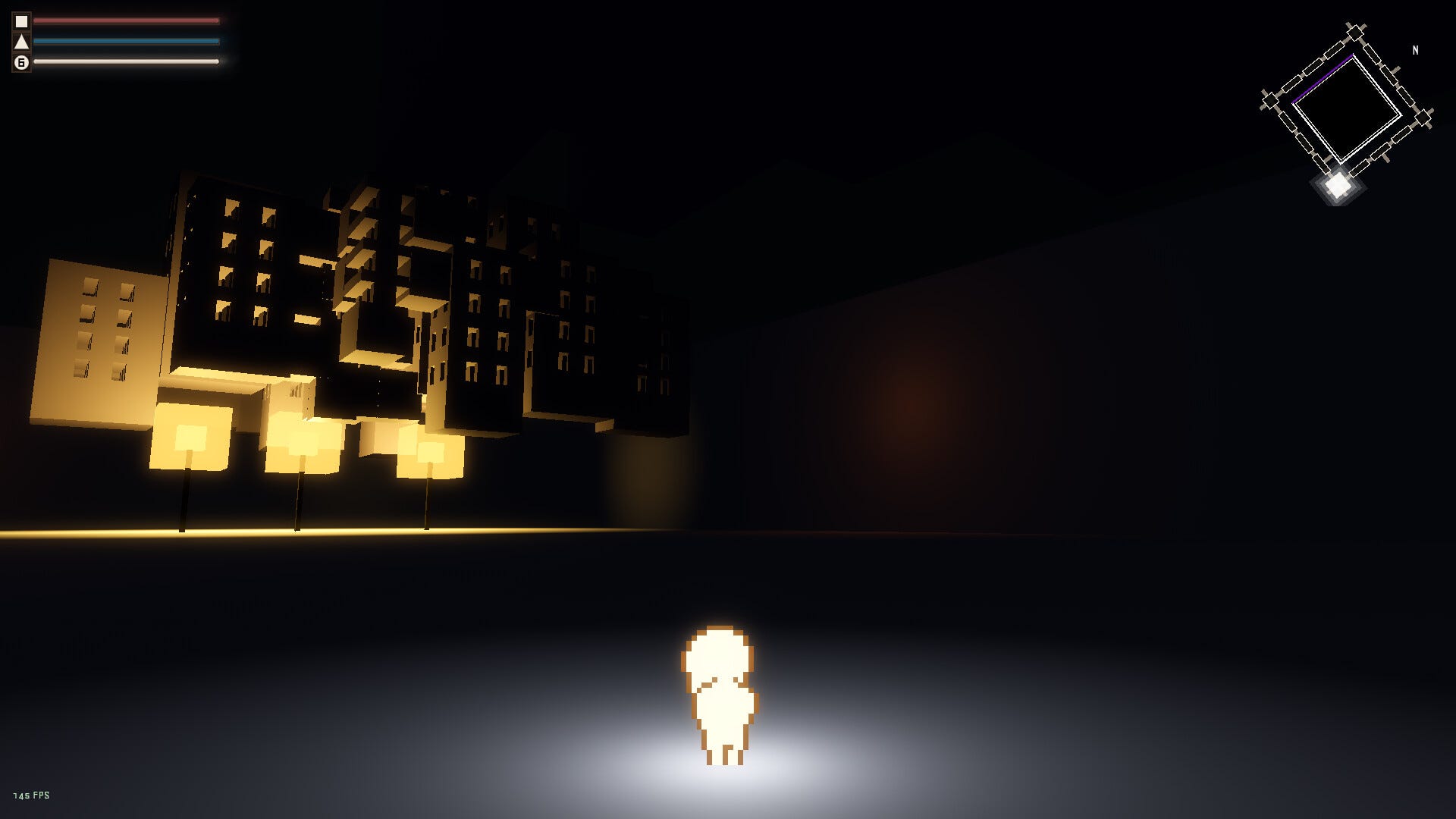
Around the spawning portal, there are several stations with which the player can merge and upgrade artifacts found in the Dome’s procedural levels. In the current build, they require a nontrivial effort to be used.
All the stations are already fully functional, but without the story to guide them, players can find it difficult to understand how they work without lots of trial and error. However, merging and upgrading the 64 Akashic Artifacts will be essential for reaching extreme distances. There are 64 Akashic Artifacts: eight sets of eight, named after particles most fitting each of the emotions, with every artefact representing a fragment of a human body.
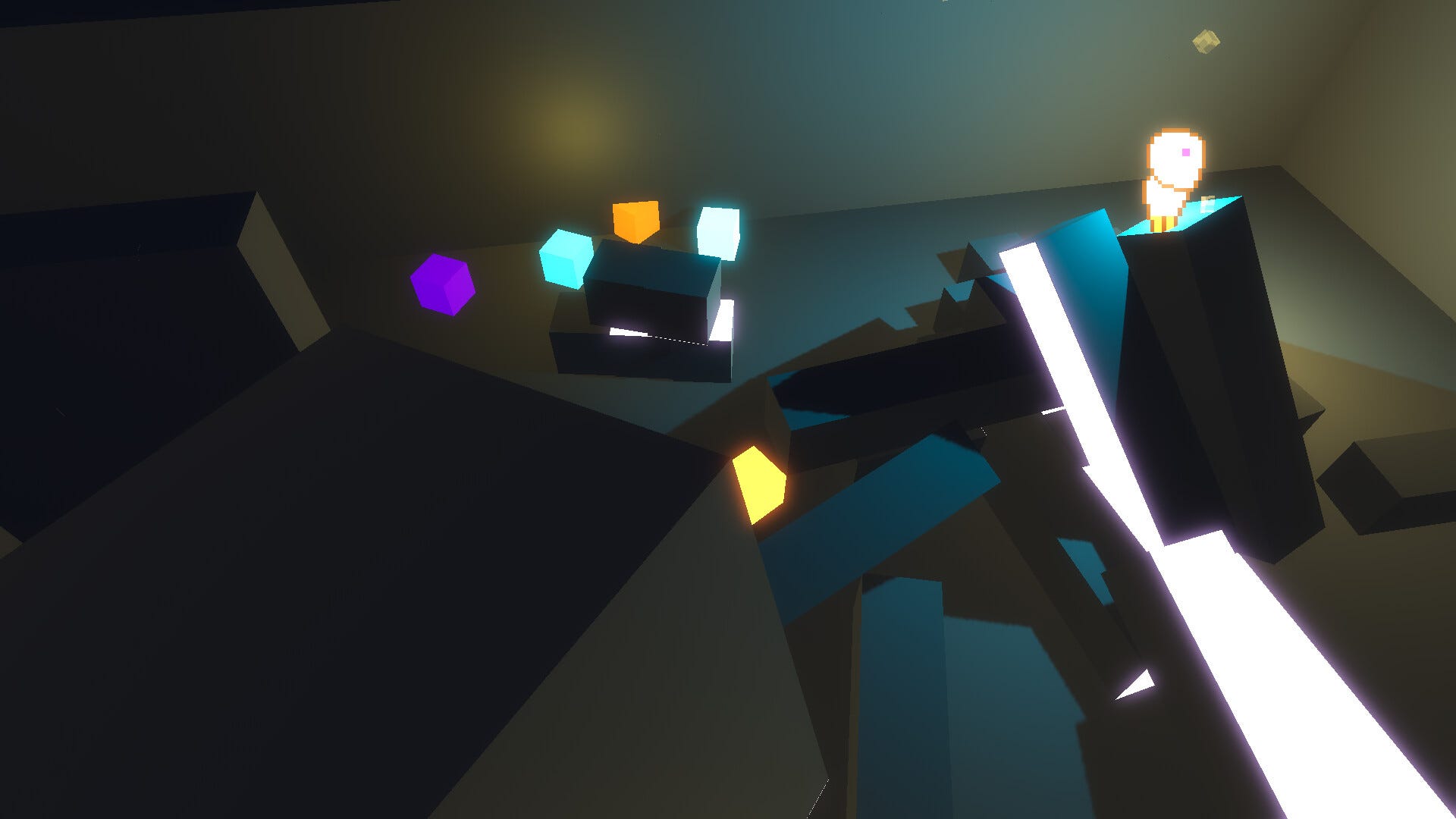
As I explored the game for a couple of hours, I often found myself in rooms I could not get out of. Nenad said that the levels are sometimes vertical, and to find your way you must think in other terms than the usual horizontal play style in many games.
There are also rooms where the exit isn’t obvious. Some require climbing rather than simply finding a door, and movement has more depth than it might initially seem. For example, jumps now preserve your momentum, so running or sliding into a jump carries you farther.
The Akashic Records
Dome features an intriguing setting, but so far the story elements are simple and just a clue of things to come. Nenad could not share specific details, but there are true events behind the player character’s past life and motivations.
The story of the game is largely inspired by real-life events. I can’t go into details, but the character you control in the game does not belong there. He is an intruder who has lost his memories and must restore them in order to figure out what’s truly going on, and why he’s there in the first place.
I pointed out that Dome is possibly the first game in history to be set in the Akashic Records as a game setting, as a place that could be visited and explored, and Nenad confirmed his intentions in the game design from the beginning.
That was the initial plan: to be the first game to use Akashic Records as the all-containing world where I can let my imagination run wild. A simple search showed me that there are many who tried their luck with the same idea. Over time, as the story got more and more intertwined, the Records kept their place only as a facade to a much bigger truth.
With thousands of hours invested in old-school JRPG games like Chrono Cross, it’s hard not to be influenced by them. And even though Dome World started as a humble flat rectangle, a character sprite and a camera viewport, I do believe I’ve created something novel, yet familiar. The Records idea was simple to imagine, but difficult to execute. The approach I took was a bit unconventional, though. Mechanics like falling through a hole and launching around were the first things I implemented. Then came the procedurally generated floors and walls. It took almost 4 months until I had something tangible.
As with several player-driven games, Dome aspires to have a player-driven, intentional narrative within a procedurally infinite world, where the sheer scale of possibilities can enhance the character development in the game.
[This] is basically the tension I’m striving for: an authored story inside a procedurally infinite world. If the story lives in places, rooms and floors, procedural generation dilutes it. So I attach the story to people and to language instead. NPCs, memory fragments, and the words themselves carry the plot, and the infinite floors stay what I imagined, a space to get lost in. The risk is that some players will bounce off before the truth clicks. The ones who dig will be rewarded.
The live-and-die cycle, a core fixture of roguelites, is the forge where players can shape their own stories. Within this cycle, the player surveys the Akashic Records piece by piece. Nenad hints at what’s to come in future updates.
The Records became a facade for a much bigger truth. The live-and-die cycle, rebirth, is part of the plot itself, and the game will be honest about that from the very first minute. The only missing piece is the story that ties it all together. Everything the player can find in the world serves a purpose in the grand scheme of things. With enough pieces, you’ll understand what the Records actually are, and who they belong to. That’s all I can say for now without major spoilers.
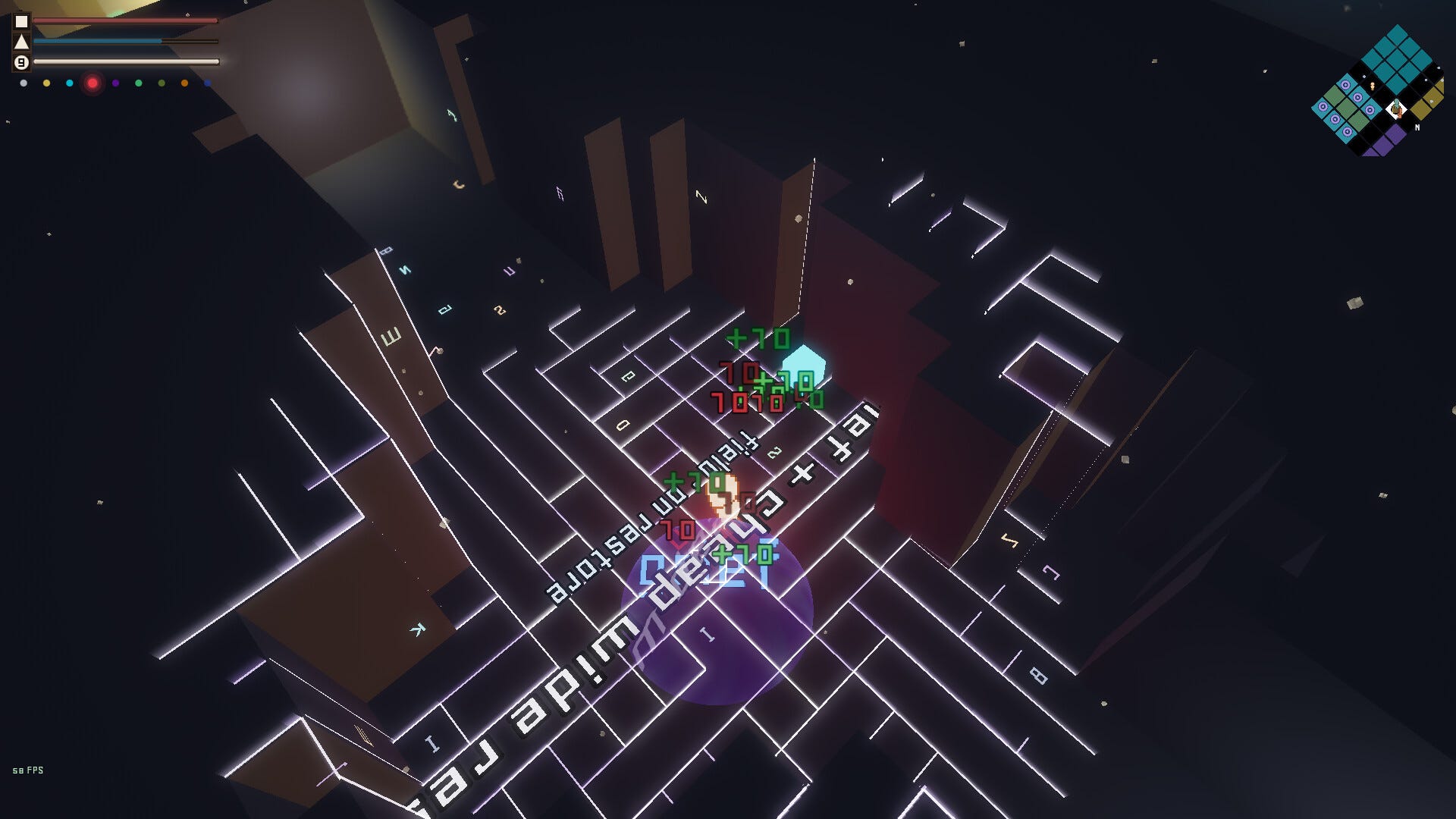
The floating letters are currently just decoration, a placeholder for an actual feature of the Akashic Records. The plan is to take obscure, genuinely fun and interesting papers and spread them throughout the Akashic Records for players to find and read by interacting with the letters.
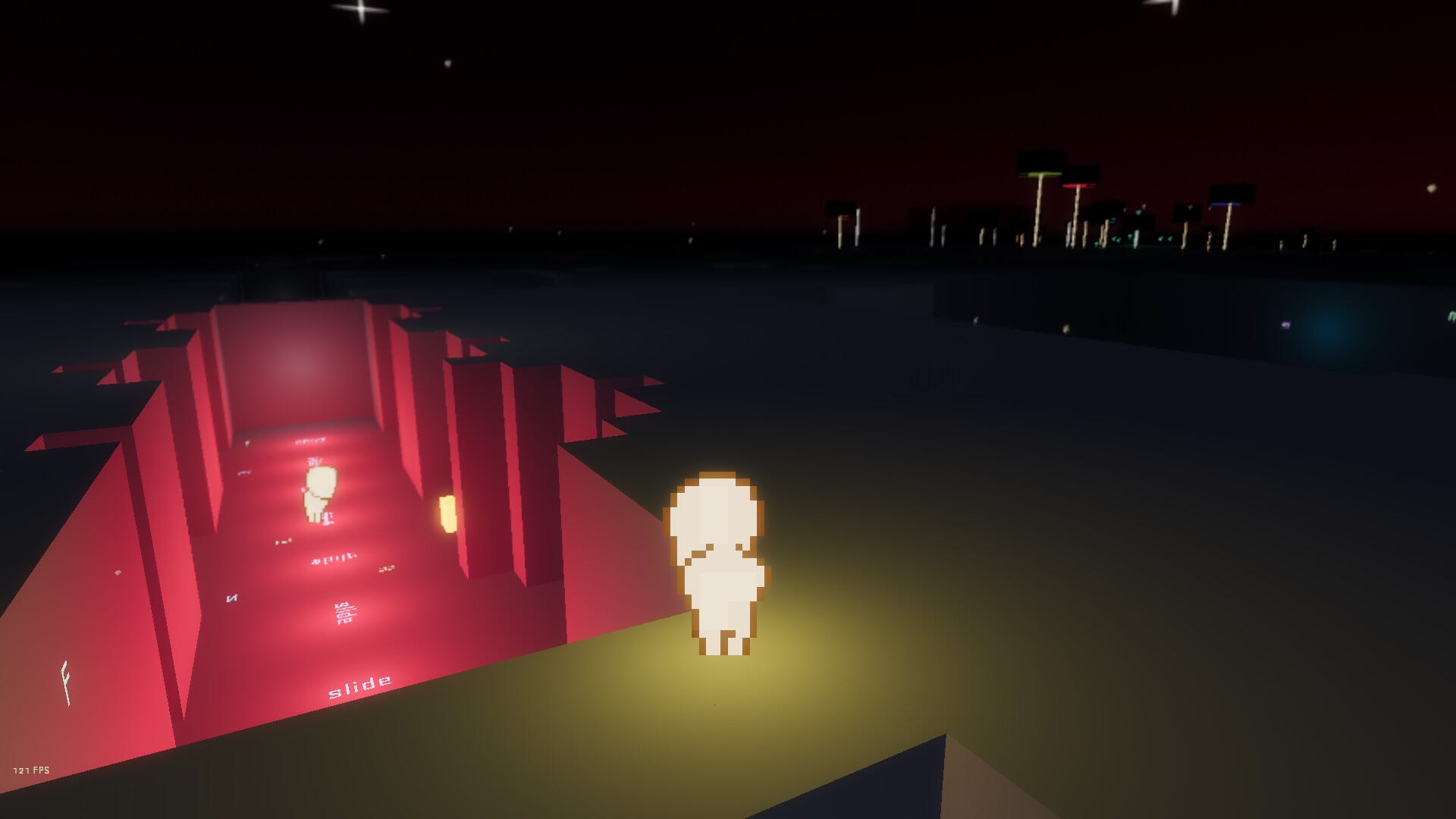
There is also an innovative design choice, where the NPCs do not speak in text boxes, a classic staple of adventure games and RPGs. Instead, the floor becomes a canvas for the conversations, and the player can keep moving without breaking the dialogue.
One design rule shapes all of it. Nobody in Dome has a text box. Dialogue is written on the floor, and the world literally writes at your feet while you’re free to keep walking. It makes conversations feel like part of the world. The deeper floors are where the stranger residents live, and some of them know things the surface NPCs don’t.
Finally, the typing game mechanic stands out in a roguelite game, and Nenad hints at some of the complex and magical things you can do by developing numerous combos, like a spellcasting typewriter.
You never need to collect letters to make words. You type the words yourself. That part is already live. NPC at the spawn teaches you your first castable word, and from then on the world reacts to what you write. It works similarly to any MMORPG chat. Hit Enter to start typing, and once again to commit the word. Later you combine words with syntax to create sentences. You can imagine it as having one Noita wand that you can upgrade, expand and fill with one of trillions of combinations to achieve crazy effects like terrain destruction, teleportation and much more.
Early Access Records
The Early Access release is just the beginning, and Nenad has some good stuff cooking in the Akashic Kitchen. He seems to be having fun with the development, even as the game barely began to find its audience.
With regards to what’s still cooking, the biggest thing is the language. Casting words and sentences is but one vital organ of the game, as there are 24 castable words and 36 two-word fusions currently live.
I want quests where you change an NPC, their mood, their situation, their fate, by speaking the right words at them, instead of the classic “catch 10 fish” loop. Everyone’s tired of those. But as I said, the mechanics are almost finished; the content that uses them isn’t quite there yet.
Players should be aware of jagged ends and be prepared to get stuck and lost. This is not the kind of game you play to feel overpowered, to accumulate powers and loot. It’s about the journey more than the destination.
The world of Dome is deliberately pretty unfriendly. The world doesn’t cooperate much with the player; it’s extremely difficult to figure out the plot, and occasionally you can get genuinely stuck because of a bug like the one you found. Once the story is in, the game will guide you much more. Characters, locations and things written into the environment will provide context and direction to systems that currently leave you mostly on your own.
The player getting stuck is one of the risks I’m willing to take while the game is in Early Access. Bugs like the room you found are expected at this stage, and many locations are still empty because the story will be implemented in a single major update rather than piece by piece, mostly to avoid spoiling it before it’s ready.
Danger scales with distance from spawn, and emotional capacity is the survival stat. So the further you go, the harder it gets, but also becomes more rewarding. Words and their fusions are the combat kit, and some enemies don’t need to die at all. They can be turned into an ally, renamed, and summoned at will.
I struggled to find my way in the game so far, and though I can’t honestly say I had a lot of fun, I often felt intrigued by what I found in the procedural levels. There is a good game here, and it will take time to develop and refine the foundation, but it might not be for everyone. Nenad is resolute in continuing the development, with an existential reflection on why we do the things we do in games.
But the honest answer is that I could point you at gear, levels and kill strategies, and it would all become boring without the why. Why level up? Why kill these things? Should you be killing them in the first place? I believe that the why is as important as the how, if not more. Those questions have real answers, and they arrive with the story.
For now, though, I actually want to see if I can make the game fun on systems and mechanics alone. If players can enjoy simply going around, experimenting, I’d consider that a preemptive win. Then the story can come in and bring everything together.
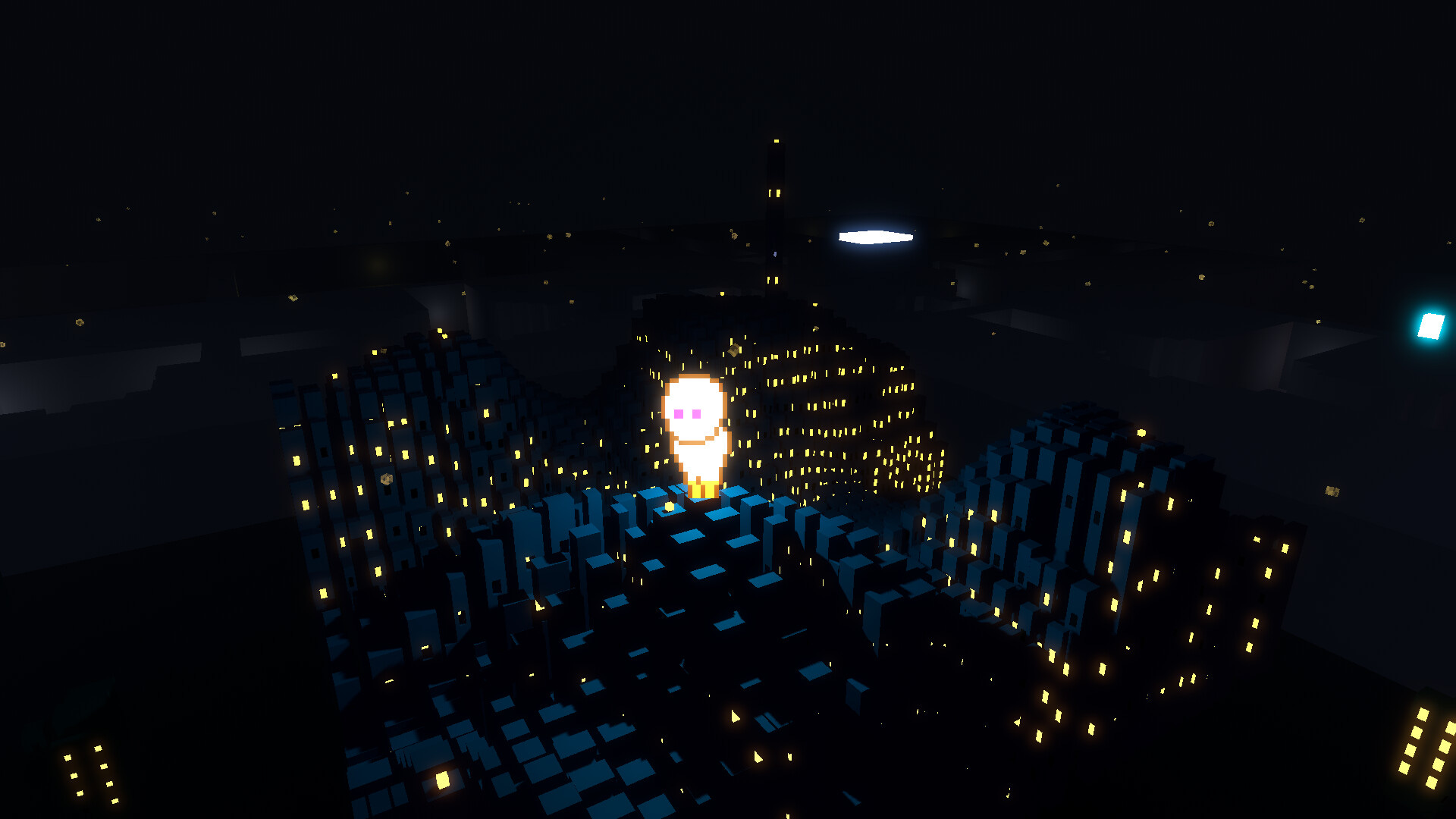
Disclosure: Dome: Become Thyself was previewed on Steam with a copy provided by the developer. The game is available to purchase in Early Access.