

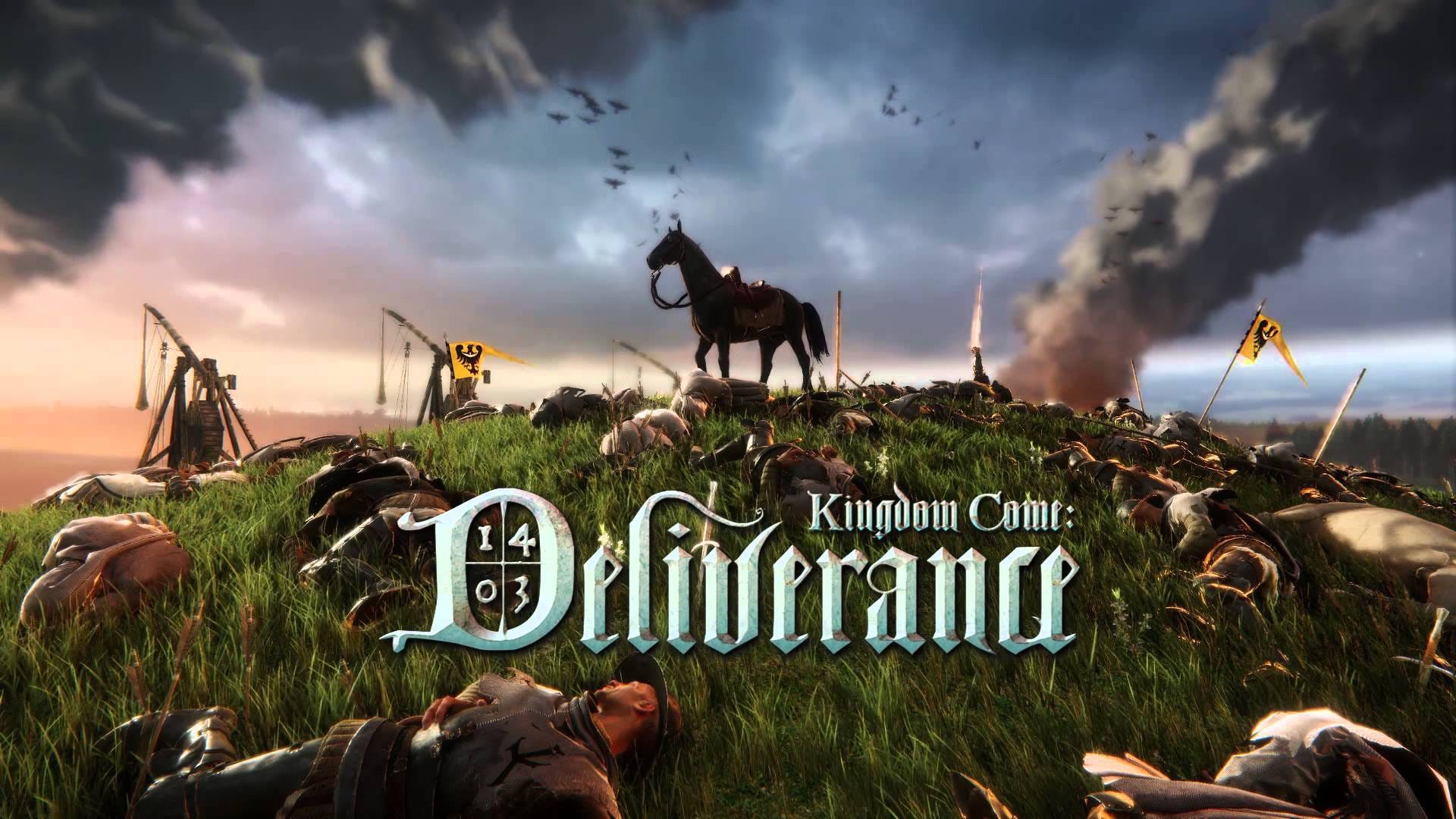
Over twelve years ago, Warhorse Studios pitched the original premise for Kingdom Come: Deliverance in their now historic 2014 Kickstarter campaign: “Realistic single-player RPG set in medieval Europe. Open-world sandbox with period-accurate melee combat. Dungeons & no Dragons.”
Years later, how can I justify the hours I have spent playing and replaying this janky, fiercely niche first-person RPG since the launch? Why do I have this visceral desire to be a refugee blacksmith’s son in medieval Central Europe and fight Cuman invaders? Why do I do this to myself? What does it say about me?
In 2018, I knew what to expect as a backer who had been following the development updates. I went in knowing it would be a niche and unorthodox first-person RPG with at least some open-ended quests and bugs. In the end, I had a whole lot of glitches but only one actual quest-breaking bug in my first playthrough, a side quest. This was not the case for many other players, according to reviews and bug reports at the time.
In 2026, many players online wonder whether they should play the original before the sequel, which achieved the GOTY status for many players and outlets. So this is less a review and more a lasting endorsement: yes, you definitely should play Kingdom Come: Deliverance in sequence. But you could also play it after you play the sequel if you can’t help yourself. Play it in sequence, out of sequence; before, after—but play it!
2018 Launch vs 2026 Royal Edition
No developer wants to deliver an unfinished and poorly designed product, but they are often forced to. The 2018 launch was a big mess, but the game was still fully playable. At the time, I wrote an ongoing review for a now-defunct website, but since then, I have spent countless hours with the Royal Edition and a few QoL mods.
Having played both the messy launch version and the latest stable builds, my experience can be ambivalent at times, but for the most part, KCD was one of the most enriching gaming experiences of my life. It was so immersive that for a week I’d forget to eat, sleep, or wash, although in-game I always kept clean and kept my stomach full.
Open-world games are never impeccable at launch, and complex open-world ARPGs are invariably a mess. Like Cyberpunk 2077, KCD epitomised Eastern European studios’ ambitions and failures. Were their failures and errors also rough paths to a more immersive game design? The power of RPGs rests on how the players engage with that complex messiness. In that sense, KCD was a powerful hit.
Freedom Before Death
You play as Henry, a blacksmith’s son in the Kingdom of Bohemia, Anno Domini 1403. You live in the town of Skalitz, just outside the castle walls. For your first quest, your father tasks you with collecting a debt from the town drunk. You can try to convince the drunk with your Speech stat, try to beat it out of him, or sneak into his house and somehow open his trunk so you can repossess the goods he didn’t pay for. This is where KCD shines: in its open-ended, non-linear quest design that places more emphasis on player agency and creativity than on following the dotted line.
This is also where it stands apart from the most successful and influential elders in the open-world medieval ARPG genre: The Elder Scrolls and The Witcher. Doing away with fantasy tropes is the surface; Skyrim and Witcher are both much more linear in terms of quest design, which doesn’t diminish their value, but it does make them less complex in terms of roleplaying possibilities. KCD harks back to the essentials of what makes RPGs stand apart from other genres: players can try different ways to complete an objective or quest, and no particular way is the only “right” solution.
My Kingdom for a Horse
In the first act, Skalitz is invaded by a foreign horde known as the Cumans, a Turkic nomadic people who settled in Hungary and worked as mercenaries. After Henry’s parents are murdered in front of him by a mercenary, he is forced to flee. In the aftermath, he goes into the service of the lord of Skalitz, Sir Radzig Kobyla, who takes the young man under his wing as they seek refuge in the market town of Rattay, where the game properly begins. From then on, Henry receives missions and training and is free to roam the open world on foot until he gets his first horse.
Replicating complete freedom in a game is impossible, which contrasts with the nearly boundless and adaptable freedom of tabletop RPGs. But the ideal remains, and Warhorse tried to live up to it, even where they failed. The best and most memorable quests in KCD are the ones where you can try a variety of playstyles to complete the objectives. Sometimes, the quests are somewhat buggy, but that depends on how you play and how you set up your actions when you complete an objective.
Revenge and Obsession
The main quest is ultimately Henry’s pursuit of revenge: he seeks to find the man who murdered his parents and kill him. Along the way, he gets caught up in a web of conspiracies and political disputes. While that’s all very interesting and detailed, the politics stays in the background for the most part. Henry’s life is entangled in the lives of peasants, lords, and bandits. He can learn the tricks of thievery from millers, help his fellow Skalitz refugees, raid bandit camps, hunt, explore, and so forth.
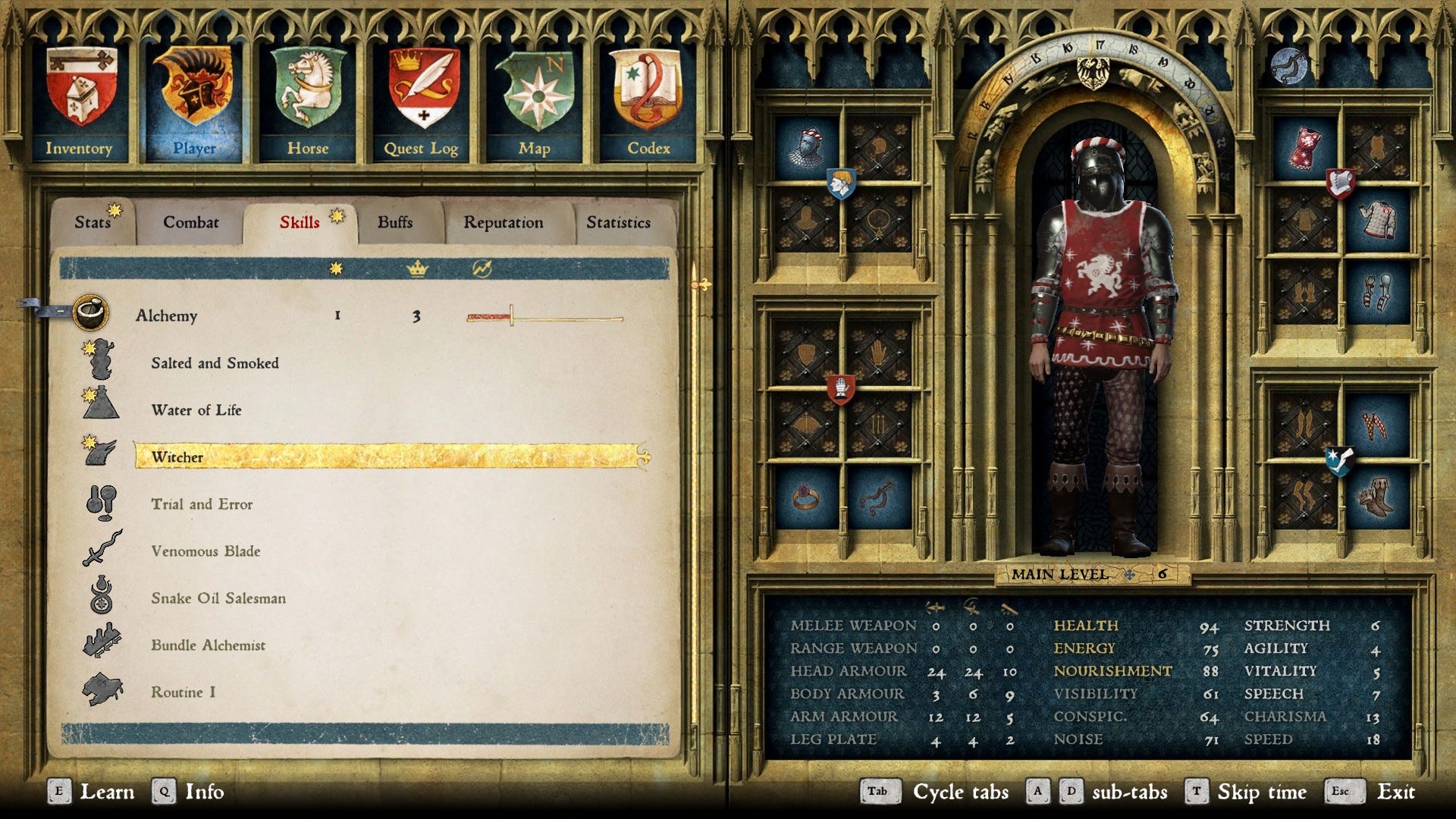
KCD’s character system is similar to Skyrim’s: your stats and skills progress as you practise them, instead of being predefined in character creation. This is also known as stat grinding, which inevitably leads to an overpowered character who can do anything and everything very well, as long as he keeps practicing. Many players will enjoy this overpowered status, but Henry could not realistically become good at everything just by practicing. The gamified progression system clashes with KCD’s defining feature: realism.
Animation and Animus
Warhorse often sacrificed realism for gameplay, but sometimes it did the opposite. The alchemy minigame, which forces you to do everything manually—moving ingredients to the bowl before you boil them, grinding them with a mortar and pestle—is immersive the first time you try it, but then gets tiresome, as you have to watch each animation before moving on to the next step when brewing potions.
Obviously, you don’t have to learn alchemy, though some quests require it. If you want to learn, it will be a bit of a hassle until you get the Routine perk, which allows you to “auto brew” and skip animations. Unfortunately, this option isn’t available for other sets of first-person animations that tend to become more samey than immersive: mounting your horse, climbing ladders, lying down to sleep, picking herbs, opening and closing doors over and over.
There are moments when it all works well, and you won’t mind waiting for the animations to finish looping. Still, I feel like there could be a workaround to skip or move faster when you are in a hurry. Sometimes you don’t have a lot of time to play, and it would be good to avoid the endless looped animations wasting your precious gaming hours. Immersion is amazing, but a player-friendly design is even better.
Rizz Playing Game
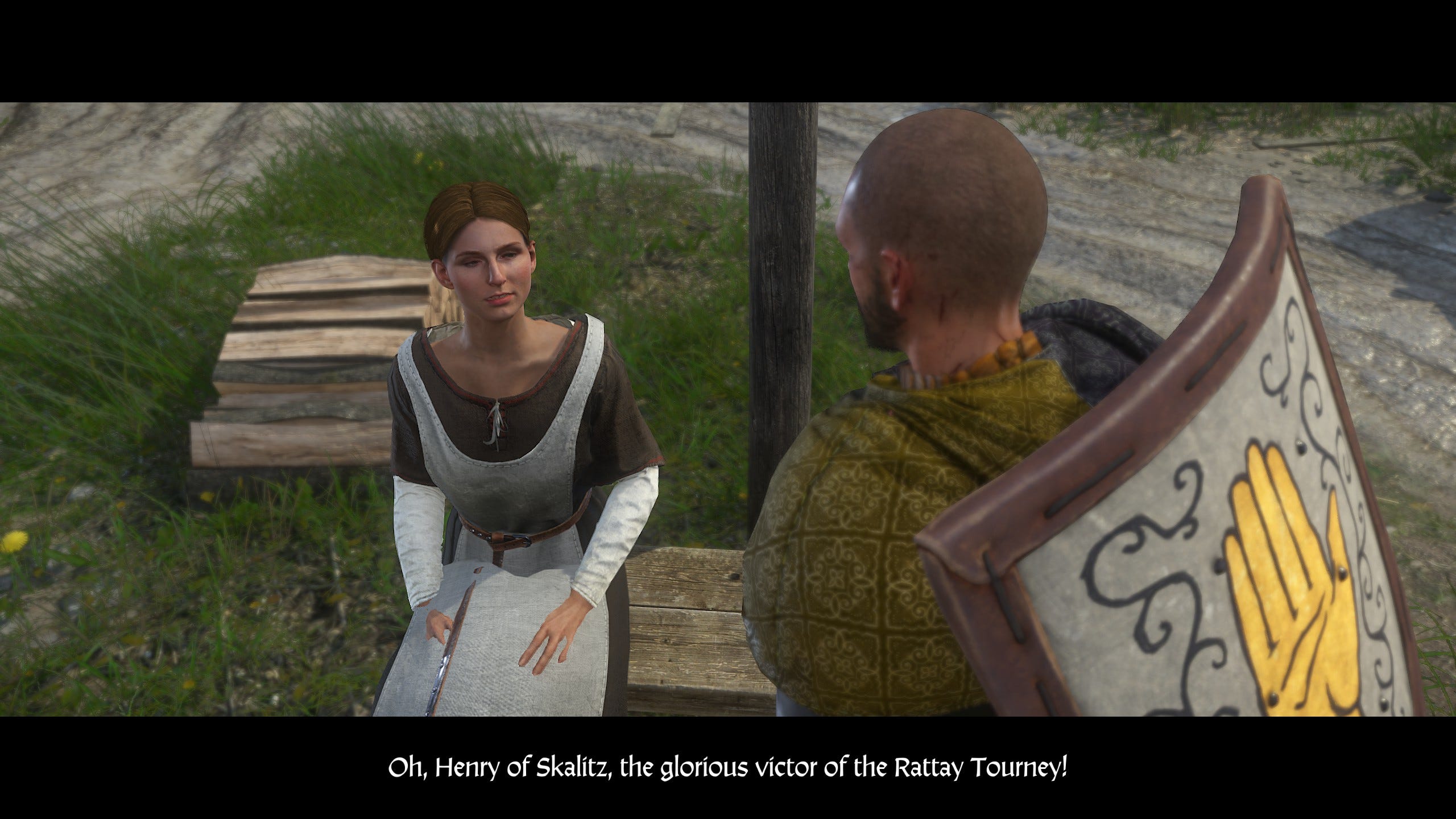
The charisma system tied to clothing is also somewhat limited. If your clothes are dirty and ragged, characters will sometimes remark on it, at first an immersive reaction. If you wear Cuman armour and step into a Cuman camp, they will approach you and speak to you as if you were one of their own. There is a quest where you are expected to do so, though it’s more trouble than it’s worth.
However, when a quest-giving NPC tasked me with meeting bandits in a camp, I went and killed a few bandits, took one’s dirty, ragged clothes and wore them for full effect, only to find that they did not react to the outfit. I reloaded and tried wearing a fancier set of clothes, and got the same reaction. The clothing system is limited and could be better, adding more immersion than some repetitive animations.
KCD’s realism shortcomings also show up in other quests. Some things are downright silly, such as the “alpha male” perk, which boosts your charisma by two when you have sex with one of the bathmaids who also launder your clothes. Chivalry was one of the most honourable virtues for men of the Middle Ages, so this kind of anachronistic attitude about sex stands out as silly.
Salvation and Survival
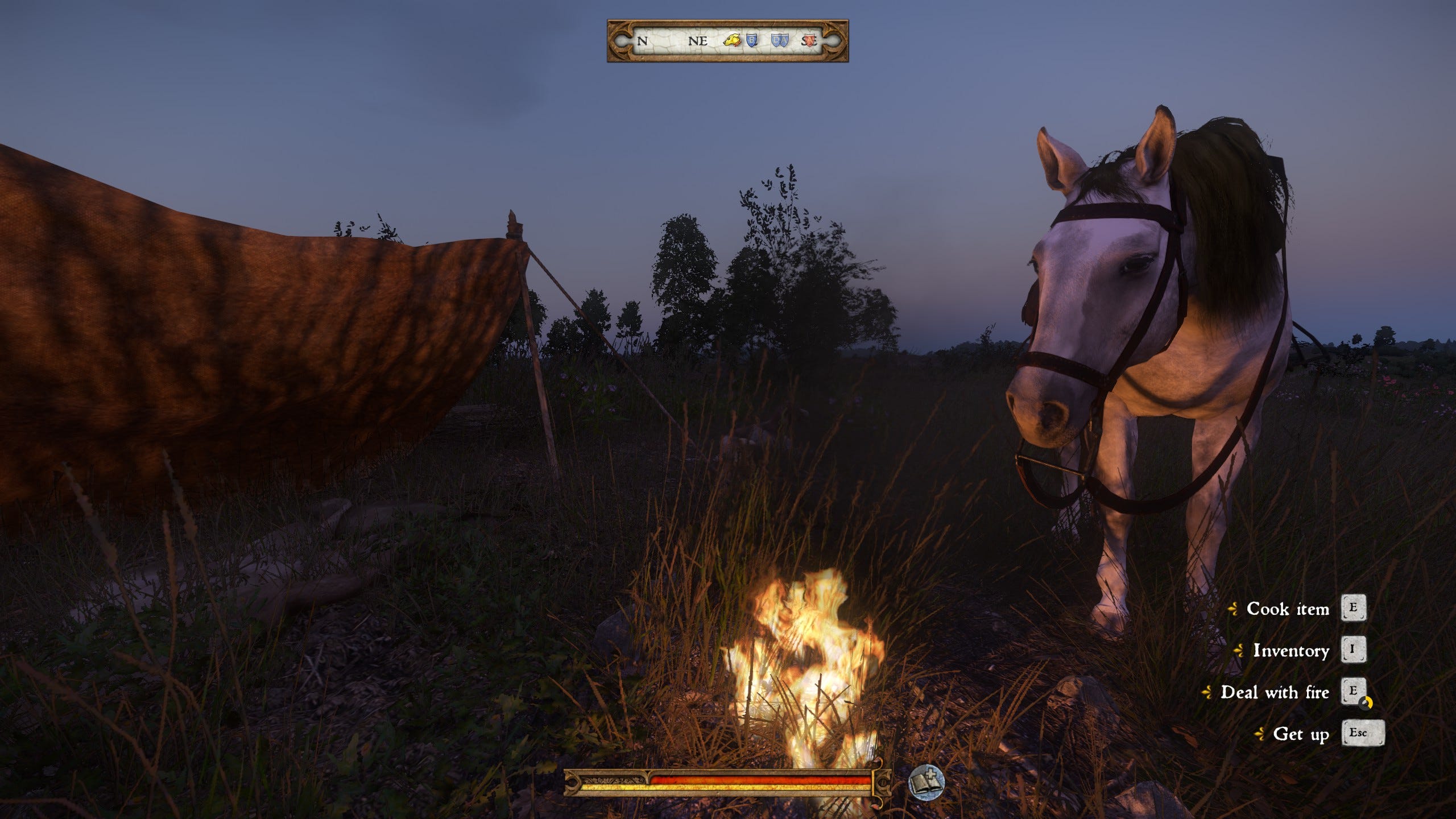
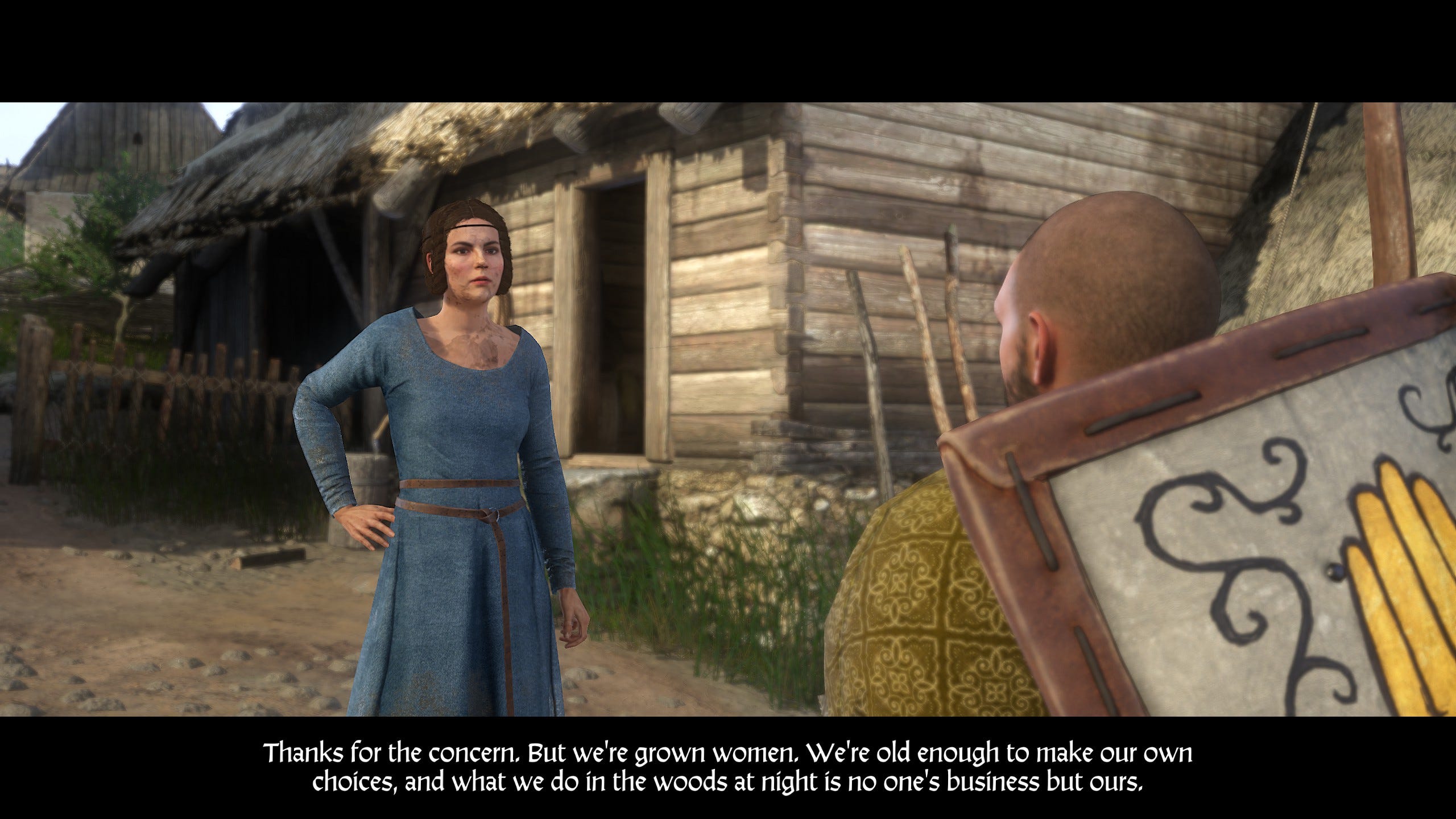
I can nitpick minor issues in the grand scheme of things, but I expected a more detailed and realistic survival mode, which I found disappointing after a while. You’ll never really starve, since food is so abundant everywhere, which was probably not the case in medieval countryside towns. You can also go without sleep for quite a long time before you start actually suffering from it or passing out.
Many players took issue with the save system, which requires you to drink a bottle of Saviour Schnapps to save the game, or to sleep in a bed you own or paid for. I found it added to the immersion and made the gameplay a bit more challenging. Above all, the speed of recovery from wounds and injuries is mostly unrealistic, but at least you can’t drink a healing potion in the middle of combat, which heightens the overall realism.
Sword and Shield
The melee combat feels realistic and visceral. You have to put weight into each attack and be on your guard so you don’t get your head smashed in. As you progress, however, it becomes much easier, especially once you learn the master strike, which reduces combat to parrying at the right time and one-shotting even very powerful enemies. By the late game, you will only struggle when you get surrounded by many enemies at once, as they stab, slash and bash you from behind.
Compared to the first-person melee combat in most games, this is the best I’ve ever played, especially for the immersion factor: the sounds and animations as you hit armour feel as real as it gets. The more you hit the enemy, the more ragged or dented their clothing or armour gets; you punch them and their faces get bruised. Material hit detection is responsive: you hit metal, and it sounds like metal; you hit leather, and it sounds like leather. The combat feels embodied, fully realized.
Archery is also excellent, especially because of the aiming without a crosshair. And when you manage to shoot an enemy right in the face, unprotected by armour, he just falls dead instead of attacking you with the arrow sticking out. If you hit them in other body parts, they keep attacking but still react to being shot instead of just carrying on as if nothing happened. The NPC AI could be smarter; it can fail to detect you have high Sneak, which is a typical issue in Bethesda games as well.
Worldbuilding in Relief
All of these details and elements in gameplay, sound and animation coalesce into a satisfying whole, making for one of the most immersive gaming experiences I’ve ever had. I often have to kind of force myself to keep playing some games because I just want to finish them at least once, but with KCD, despite all its issues, I had to force myself to stop when the hour was late.
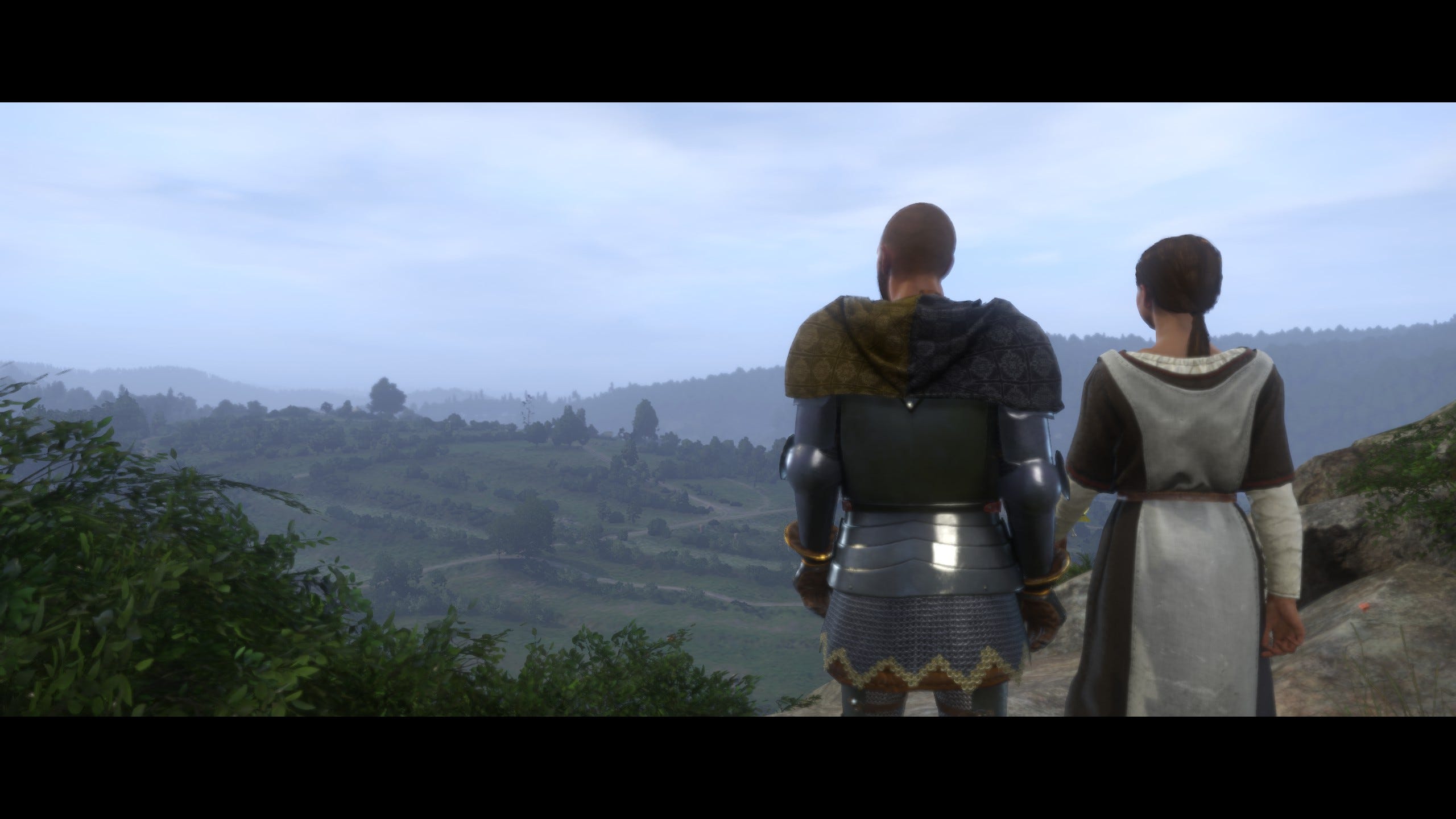
And that doesn’t have much to do with the story itself, which for the most part is fairly commonplace. It’s the sheer immersion that keeps you going: hunting in the woods, listening to the birds chirping and the rabbits bouncing and stepping on bushes, watching the NPCs go about their daily routines. It feels like a living, breathing world, bustling with life.
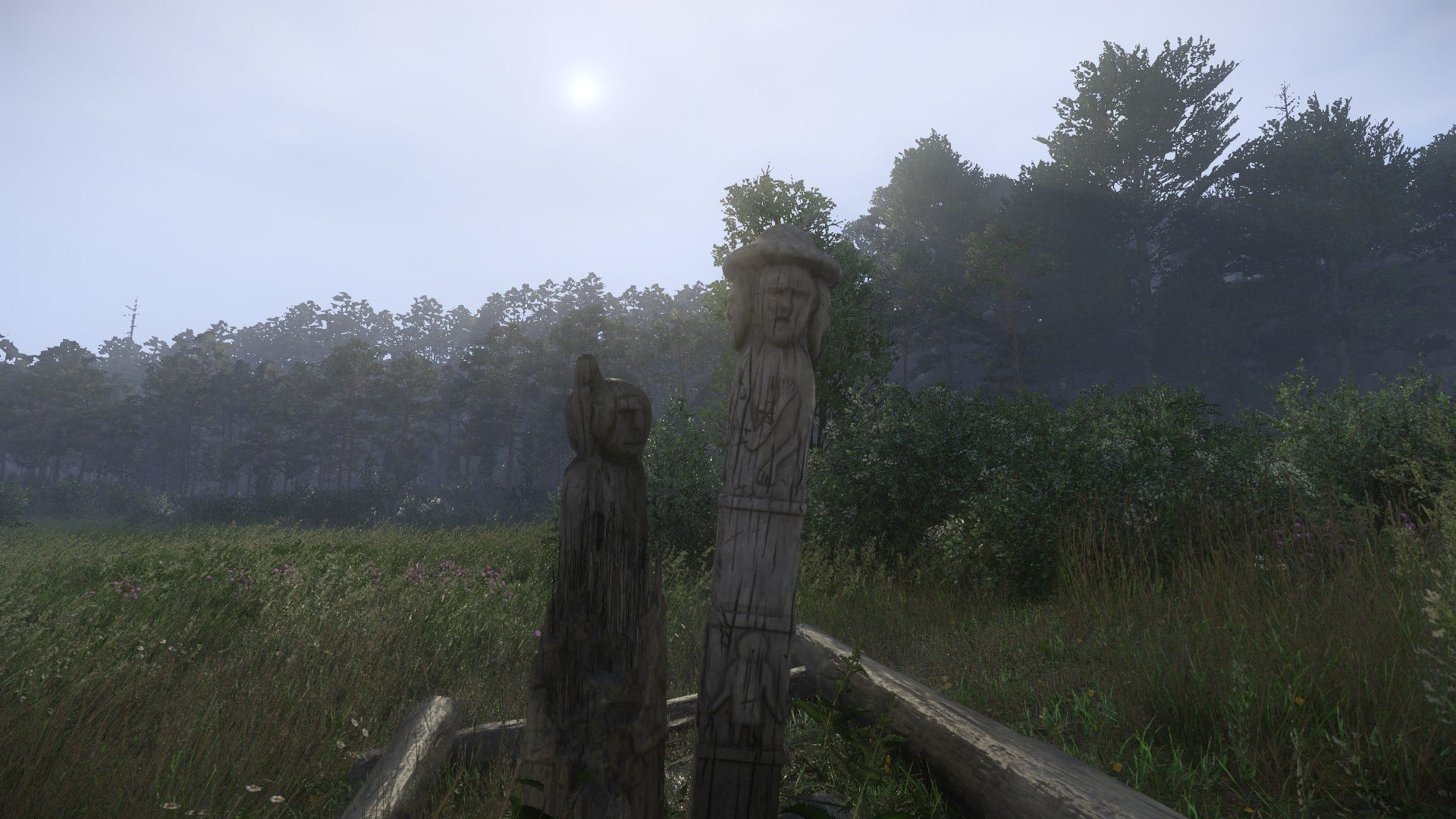
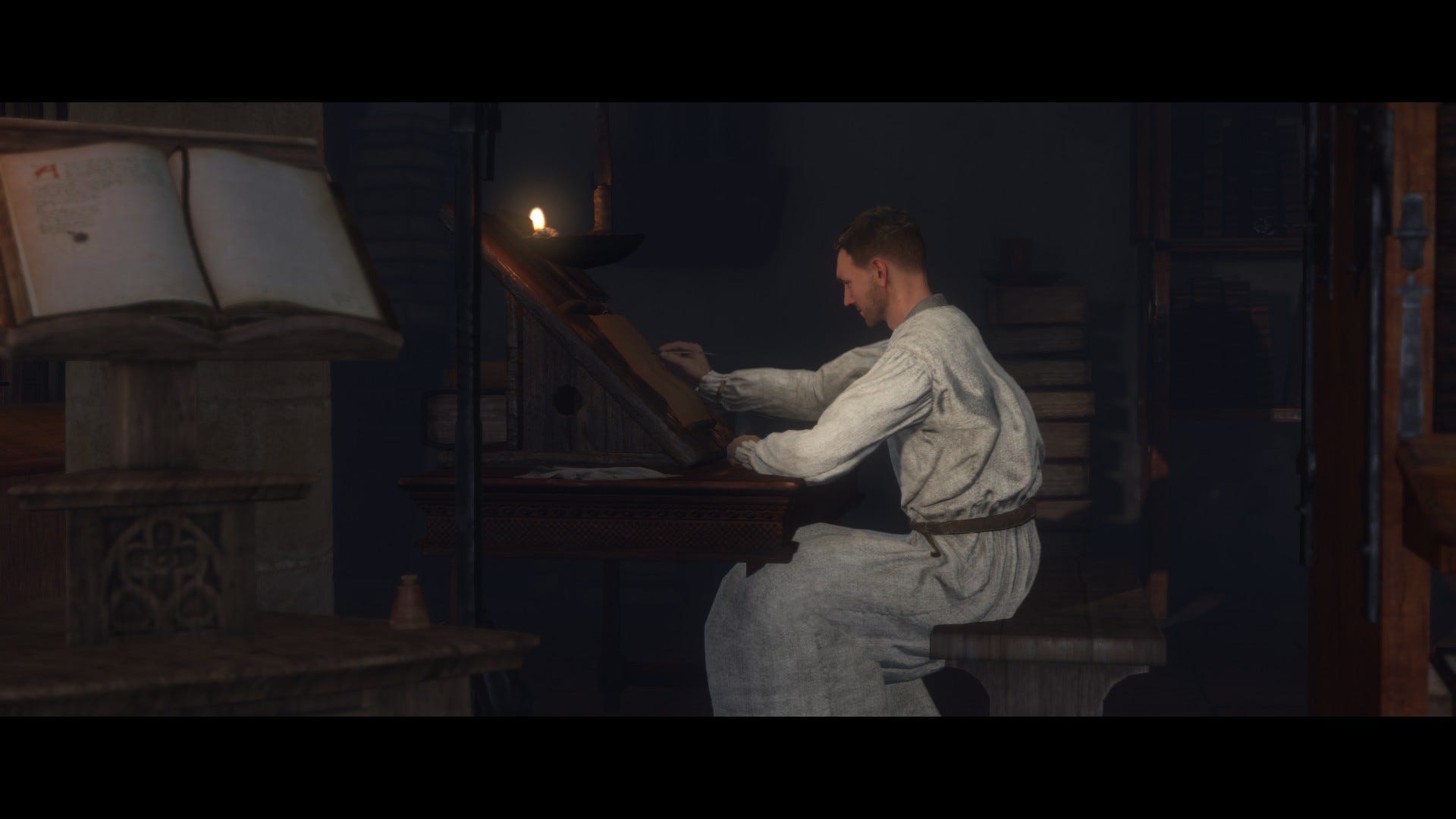
The forests and foliage are unlike anything I’d ever seen in a game, probably the densest and most lush in any game. The woods look and feel like real-life woods in every way, and it’s a pleasure to walk through them. The interiors of castles and buildings are also highly detailed and filled with wonderful frescoes that add to an already grand ambience.
Niche Classic
KCD is a great game with rough edges. As a product, it has its shortcomings, but as an RPG, it is incredibly immersive and inventive. The main quest has pacing and writing problems, blending action and political intrigue with quests that involve role-playing and problem-solving, making it one of the best RPGs of all time. By refusing to hold your hand, it may be rougher around the edges and more demanding in terms of attention, but also much more rewarding because it doesn’t play itself by following the dotted line and the quest mark, like so many RPGs.
It’s not for everyone; as many reviewers and critics noted, KCD is the definition of a niche RPG, and it wobbles under the weight of its ambition. It is committed to thrusting upon the player a lofty, extravagant experience of immersive simulation and realism that most gamers are probably not interested in, but those who are into the complex machinery of RPG systems and interactions will have their hands full with it and get their money’s worth in both quality and quantity.
Kingdom Come: Deliverance endures as a cult classic and a genre-defining RPG in the shadow of games such as Planescape: Torment and Fallout: New Vegas, both games that continue to endure despite niche idiosyncrasies or a royal mess of a launch. This is a niche classic and, hands down, one of the greatest RPGs of all time.
Gallery


Kingdom Come: Deliverance is available on Steam, GOG, Epic, Xbox, PlayStation, and Switch.